Friday, 3 October 2014

NORTH SYDNEY GENEALOGY PHOTOS

How do you put a price on history? I am always amazed at how cheaply you can buy a historical artefact. I love visiting antique shops. When I do, I see such amazing things, clothing, furniture, crockery, items the function of which has been forgotten. I particularly like old photos and postcards, they will often have a little writing on the back the name of the person in the photo or, if a postcard, will have a little note written on the back by the sender. If it was displayed in a museum it would look priceless but in an antique shop the price be very small.
I personally enjoy visiting antique shops better than visiting museums. In an antique shop you can touch things, pick them up, turn them over and look at what’s underneath. Maybe, if the shop keeper isn’t looking, you can also give things a little shake or see how they smell. 
I bought this photo on ebay a couple of years ago for $10. It’s a handsome photo of a very well dressed mature man with, what I thought, was a sympathetic face. ‘Rev F L Kelly’ was written on the back. On the front it had the photographer’s name ‘Brenton R Rice’ and the location of his studio: North Sydney. As a local history librarian I thought this would be a great one to research and add to North Sydney Library’s photo collection.
The surname Kelly is not the easiest name to research but the fact that he was a Reverend narrows it down quite considerably. It is a cabinet card photograph. I thought, from the quality of the photo and backing cardboard, probably taken in the late 1890s. I looked in the Sands Sydney directory of the time and found nothing. I tried the Trove website and looked through library files on the various churches that were in our area. Nothing there either.
I thought Rev Kelly might have only been visiting North Sydney when he decided to get his photo taken here. But where was he visiting from? I approached the nearby archivist of St Mary’s Church (North Sydney) but he knew nothing. What was going on here? I was completely stumped.
I thought I’d try researching the photographer. Even if I couldn’t find the subject the photo would be a great artefact of a local North Sydney business.
You might know that the best reference sourcebook for this kind of thing is a book entitled, ‘The Mechanical Eye in Australia: photography 1841-1900’ by Alan Davies & Peter Stanbury. It really is the bible of Australian historical photography. It has a complete listing of every commercial photographer in Australia, when they operated and what address their business operated from. Every photograph that was commercially produced back then had the business name of the photography studio printed on it. This can be really helpful when dating old photographs and finding where they were taken. This book is now out of print but there is usually a copy kept in the reference section of most libraries. The information in it is priceless I don’t know why they don’t reprint it.
Unfortunately ‘Brenton R Rice’ was not listed in that book as a photographer anywhere in Australia. I was amazed.
A friend pointed out to me something else mysterious about the photograph. Under the words NORTH SYDNEY were the initials C.B. What did that mean? CBD would have meant Central Business District but it was only C.B.
It was during breakfast when I was pouring some maple syrup on my pancake and about to tuck into a large helping of chocolate moose that I realised that there is another city named Sydney on this earth. That city is located in Nova Scotia, Canada. Looking on Google Maps revealed that it is on an island in Nova Scotia named Cape Breton island – C.B. and sure enough Google Maps showed there is a North Sydney there too.
I contacted Ian MacIntosh the librarian at the Cape Breton Regional Library in Sydney Nova Scotia and he said the photographer was from Cape Breton island and that the Rev Fenwick Lionel Kelly was a local of North Sydney, Nova Scotia.
Not only, it turns out, was Fenwick Lionel Kelly (1863-1944) a prominent local he was prominent nationally as, at one time, the Liberal Party member of the Canadian parliament for the seat of ‘North Cape Breton and Victoria’. He was part of Prime Minister William Lyon MacKenzie King’s government from July 1923 – September 1925.  He has his own brief Wikipedia page if you are interested.
I don’t know if the person who sold me the photo thought he was being clever by advertising it as being from North Sydney, Australia. He certainly wouldn’t have thought he was clever if he realised that he only got $10AUS from me when he could have got more like $50CAN from someone else if he knew who Rev F L Kelly really was.
I, in the end, did what I always intended to do and donated the photo to the North Sydney public library photo collection for the inhabitants of North Sydney to enjoy in perpetuity. Of course that is the North Sydney public library in Canada not the North Sydney public library here in Australia.
I had the hopeful thought that someday, if a local history librarian over there should happen to find a photo in their collection of, for example, a kangaroo hopping down one of the main streets there in Nova Scotia, that they might realise it came from an erroneous ebay purchase and send it here to add to the photo collection of Stanton Library, so that we, the inhabitants of North Sydney Municipality, could enjoy in perpetuity instead.


Ps I never found out why someone wrote he was a ‘Rev’ on the back of the photo. Any ideas or info about this is welcome.


Tuesday, 23 September 2014

STORIES THAT COME FROM SILENCE


When we research our family history what we are primarily doing is discovering stories. Almost always these are stories that we are discovering for the first time. They are unique and our own. We are explorers trudging through the darkest jungles of dusty records until the moment of recognition….. Dr Livingston I presume.  Sometimes though the story is found not by what is written on the page but by what is not written. The blank page says more than words could ever say. There is an emotional profundity, a silence, a space, as we find in the final page of a war record or the death record for a child.

In the St Nicolas Church graveyard in Nuneaton, Warwickshire there is a headstone for an Elizabeth Ball. It says, whose death was occasioned by her fall from her horse.  A few words. A tragedy encapsulated in a sentence. Nothing else about her is said.
 
 
St Nicolas Church, Nuneaton parish burial record
 
 
It’s always harder to find information about female ancestors than male ones. There were no photographs back then. Women would appear on very few documents. They wouldn’t appear on tax records or voting records or military records as their husbands did. Her story can only be surmised through the lives of the people who lived around her. Her story is told by the silent spaces.

She died on the 7th of July 1793 when she was 52 years old. She had 9 children five of which were under 18 years of age, the youngest, William was aged 10. What happened to them?

She was Mrs Ball after marriage and she was Miss Ball before it. Her husband Timothy Ball was most likely a cousin. He was two years younger than her. They were baptised, married, worshipped and buried in St Nicolas Church Nuneaton. Did they meet there too?
 
Parish record from St Nicolas Church, Nuneaton
 
 
Timothy Ball was variously described as a yeoman and a grazier. He owned land in a place nearby called Hides Pasture. He was a prominent citizen of his local community.  His name appears on many documents but not much is known about him either.

Timothy remarried a year after Elizabeth’s death but then died himself shortly after in 1795. Was this from grief?

It’s not known if Timothy’s second wife, Hannah, became a step mother to the orphaned children. In her will of 1830 she leaves Timothy’s children 50 pounds each, referring to them as her ‘friends’. Were they more than that?


For all of us who pursue genealogical research we are always collecting fragments like these; a name, a birth date, a death date, an occupation and so on. No matter how many fragments we find we are always just looking at the tip and trying to piece together the iceberg of our ancestor’s lives. It is an iceberg that is only conceived when we imagine the vastness of the ocean that contains it. It is what’s not said that speaks the loudest here. The story is told by the spaces that surround the fragments. It’s a story that comes from the silences.

Twenty seven years after Elizabeth Ball’s death, in a church 1 kilometre away from St Nicolas, Nuneaton a baby girl was christened. Unlike most women of her age her thoughts feelings and life would be well-documented. Thought to be too physically unattractive to have any serious prospects of marriage but having a sharp intellect her father decided to invest in her education. Something not typically afforded women at that time.
Mary Ann Evans, who was christened on 29th November 1819 in All Saints Church in Chilvers Coton, was educated and grew up in Nuneaton and the surrounding area. She was an intelligent and voracious reader and when she wrote what was to become her first novel, at age 37, it was her childhood and adolescent memories that she drew from. Choosing the nom de plume George Eliot, the characters in her novels were said to have been based on people that she knew from her early life.
 
Mary Ann Evans (1819-1880) aka George Eliot
 

There is only one character from her novels which is definitely thought to be someone from my family tree. The character of Rev Archibald Duke from her book Scenes of Clerical Life (1858) was thought to have been based on the real Rev Henry Hake, vicar of Chilvers Coton. He was the husband of Elizabeth Ball’s great niece.

Her description says he was: a very dyspeptic and evangelical man… whose hair is brushed straight up, evidently with the intention of giving him a height somewhat less disproportionate to his sense of his own importance than the measure of five feet three accorded him by an oversight of nature.

She doesn’t describe him as much of an iceberg. Mostly ‘tip’ I think.

As with any ‘person of note’ the events of Mary Ann Evans life are incredibly well documented. Her novels have been described as psychological portraits of the characters within them and as such, I think, they are also psychological portraits of herself. This much genealogical information for an ancestor would be an exceptional find for anyone let alone for a woman of that era.

Elizabeth Ball’s grandson John Ball was, like Mary Ann Evans’ father, a farmer. John farmed a small piece of land in a hamlet called Griff not far from Nuneaton. He went to All Saints Church, Chilvers Coton, where his son Benjamin , my grandfather’s grandfather, was christened.
 
 
 Griff
 
 
It’s hard to believe that Mary Ann Evans who lived nearby in Griff House wouldn’t have had some contact with the Ball family nearby. Did she see them passing on the street? Did she ever say hello, have a conversation or shake their hands? I’ll never see what filled the silent spaces of my ancestor’s lives, but did she? Did they inspire a character, a sentence, a word in one of her books? I can only imagine.

The spaces of our lives can never be known without imagining the vastness of the ocean that contains us. The blank pages and record fragments that are left from a life will never tell it all. It’s what is unsaid that often speaks louder than what is said. Will our descendants find our stories, will they understand them, or will they only be revealed through the silent spaces?


Wednesday, 10 September 2014

THE TOTAL POINTLESSNESS OF GENEALOGY


How far back does your family tree go? Usually people with an English ancestry, with a lot of hard work and a bit of luck, can get back to around the 1600s, or late 1500s. This was when the parishes started recording baptisms, burials, marriages and the like. However if one of your ancestors was nobility you can often go back much further. If you were a noble it was because you were born one. It was in your blood it was your pedigree. Your privileges depended on a well recorded line of descent. Each aristocratic family had one. It was vitally important for them that they had a record of this.
If you are lucky enough to find someone of noble birth lurking somewhere in your family tree you can often find a recorded trail of descent that goes back 1000 years. There were books of pedigrees that were published such as Burkes Peerage in the UK or the Almanach De Gotha in continental Europe that can be a great source of information about this.
Almanach De Gotha
My Great Great Grandmother was Caroline Davenport (1846-1921) who was born, and died in Davenport, New York. The town she lived in was thought to have been named after Thomas Davenport (1615-1685) who was Caroline’s Great Great Great Great Grandfather. Thomas Davenport arrived in Massachusetts Bay Colony around 1635. Thomas was born in 1618 in Macclesfield, Cheshire, England. His grandfather was William V Davenport (1561-1640) Lord of Bramall Hall. The Davenports lived in Bramall Hall for 500 years. They have a well-documented pedigree that goes back to Orme de Davenport who was thought to have been born in Normandy in 1086.
BRAMALL HALL
All people named Davenport in the English speaking world all go back to Orme who was part of the Norman conquest of England and was thought to be a cousin of William the Conqueror. The Davenport family owned numerous manor houses in the Cheshire area.
 
 DAVENPORT COAT OF ARMS
You might feel disappointed that you don’t have an ancestor that you know of who lived as far back as Orme de Davenport but you shouldn’t. Because if you have English ancestry I can tell you with absolute certainty that he is your ancestor too. Yes, Orme de Davenport is your ancestor as well as he is mine. In fact it’s been estimated that 86% of the people who lived in England at the time of the Norman Conquests in 1066 are your ancestors if you have English ancestry. The 14% who aren’t are people who didn’t have children.
In fact just about everyone who lived in England in 1066 (1.11 million people) are ancestors to all current residents of England. For anyone with an English ancestry that means you.
He's one of your ancestors
Not only is Orme de Davenport your ancestor once he is your ancestor multiple times. If you read my last blog post you will know that if you go back 30 generations you have a trillion ancestors, which is more people than have ever lived, so ancestors will appear in your tree multiple times. We are all cousins with each other many times over.

A page from the Domesday Book c1086
86% of the people in this book are your ancestors
 
Does this sound incredible? It did to me but this is a mathematical certainty. I’ll tell you why.
If a family tree was binary, that is the number of ancestors doubles every generation you go back, then when you go back 30 generations you would have 1,073,741,824 ancestors, which is impossible. Because cousins marry that number is much less. So how much less? If we were all Egyptian pharaohs and we married our sisters, as they did, after 30 generation going backwards we would have two ancestors. If every generation going back first cousins married then after 30 generations we would have 60 ancestors. We know that both of these scenarios are impossible. If every generation going back were 2nd cousins marrying then 30 generations back we would have 4,356,616 ancestors. That is still more ancestors than there were people in England back then. For 3rd and 4th cousins there is a smaller increase than the 2nd cousins marrying scenario, but still much too many.
The only way that you will find enough ancestors to fill every spot in your family tree is if everyone who lived back then was your ancestor. That's right everyone. For people with an English ancestry the point at which this happens is around the 1300s. If you have partial English ancestry you might just have to go back a little further, but not much further.
A disagreement between a group of your ancestors
aka The Battle of Hastings 1066
You might ask things like what if my ancestors only stayed in a little village for generations isolated from everyone else. I know from my family tree that this did happen but not for a thousand years and no village is totally isolated from every other village anyway. There were often sudden mass movements of people as well for various reasons.
Looking at it this way genealogy really is a pointless occupation. If you are looking to see if you have an ancestor like Orme de Davenport you don’t really have to. He is your ancestor. Everyone who lived back then was your ancestor. There is no need to find a line of descent at all. I’m personally going to cancel my subscription to Ancestry.com immediately. What’s the point? Why do I write this blog at all. I could be watching re runs of ‘I Love Lucy’.
Lucille Désirée Ball (1911-1989)
no relation
For European family trees you will never get much further than the 1000s. No one has yet gotten past the European ‘Dark Ages’ but there is a family tree that does go back further. It goes back to 1675 BC. This is a family tree that is still actively being worked on and living descendants added to. It is none other than the family tree of Kong Qiu 孔丘who is known to us in the west as Confucius.
 
If you are interested in pointlessness this one the most pointless of them all. The Confucius family tree has about 2 million known and registered descendants and goes back 77 generations to reach Confucius (551-479 BC). It starts way before Confucius with an ancestor who lived in 1675 BC named Zhao Ming. This ancestor lived before the Romans and the Ancient Greeks. He lived in the Bronze Age. There are people alive today who can trace an ancestry back to him.

Confucius (551- 479BC)
The Confucius Genealogy Compilation Committee meets regularly to update this tree which records male ancestors only. To make it really pointless, in 2007, the Committee decided that women should be included too. This is pointless not because women don’t deserve to be included but because if you include them then it will inevitably include every living Chinese person. It’s a mathematical certainty. How pointless is that?

Thursday, 28 August 2014

KISSING COUSINS


No cousin is an Island, intire of itselfe; every cousin is a peece of the Continent, a part of the maine; if a Clod bee washed away by the Sea, Europe is the lesse, as well as if a Promontorie were, as well as if a Manor of thy cousins or of thine owne were; any cousins death diminishes me, because I am involved in Cousinkinde; And therefore never send to know for whom the bell tolls; It tolls for thy cousin.                            
 (by William Donne , John’s cousin)

All of us have two parents. They in turn also have two parents. Our grandparents have two parents as our great grandparents did before them. If we look at our family trees   going back in time we have 4 grandparents we have 8 great grandparents we have 16 great great grandparents, 32 great great great grandparents etc. When we go back 40 or 50 generations we have, roughly, one trillion ancestors…… But how is this possible? That is more people than have ever lived. Where do we find the trillion ancestors we need to fill the spots in our family tree? This can only be done if they are filled by family members who are already in our tree. This can only happen through cousin marriage.


Cousins have been marrying each other for ever. In fact if you go far back enough we are all cousins so it’s impossible to avoid marrying a cousin even if you wanted to. My parents both share a Mayflower ancestor. They are 9th cousins once removed. They might also be 12th cousins, 7th cousins twice removed and 20th cousins 5 times removed as well only these connections just haven’t been made. This is true for all of us. We are all cousins with each other many times over.
Because of cousin marriage family trees are not really like trees at all. If our family tree was a living tree it would be a confused mess. Some leaves would have two branches. Branches would connect then disconnect again. It wouldn’t be structurally sound. It would collapse immediately. The term ‘Pedigree collapse’, coined by Robert C. Gunderson has been used to describe this phenomenon. Family trees are more accurately described as Directed Acyclic Graphs or DAGs. It’s a diagram that goes in one direction, parents have children, and as you cannot be your own ancestor, it is not a cycle, it is acyclic. You will find your family tree, like mine, is full of DAGs.
It’s been theorised that every human being is at most 50th cousin distant from everyone else. We are all incredibly inbred. There is no way we can marry anyone who is not already a family member. You might ask, Is this a problem? At what point is this incestuous? At what point do our offspring start growing pointy heads and extra fingers? How close a cousin can we marry?

Adeline Lovina Webster (1872-1957)
 
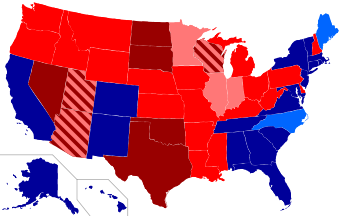
George A Hinckley (1862-1947) was my grandfather’s uncle. He married Julia Goodrich in 1887 who died shortly after while giving birth to their first child Mabel in 1888 Two years later in 1890 he married Adeline Lovina Webster (1872-1957) who was his mother’s brother’s daughter, she was his first cousin. It was not illegal to marry your first cousin in Vermont at that time. However if they had lived in nearby New Hampshire it would have been. So why is it illegal in some places but not others?
We in Western countries have no problem with second cousins getting married but we generally are averse to first cousin marriage.  This comes from thinkers of the late 1800s who thought that that first cousin marriage was, “a remnant of a more primitive stage of human social organization”, and non consanguine (cousin) marriage would "increase the vigor of the stock". Dr Samuel Merrifield Bemiss of the American Medical Association wrote in an influential report in the late 1800s "that multiplication of the same blood by in-and-in marrying does incontestably lead in the aggregate to the physical and mental depravation of the offspring".

Cousin Marriage banned in 'red' states

Modern statistics show that first cousin marriages do increase birth defects but only by a tiny 1.7% to 2.8%. They had no accurate statistics of this in the 1800s.
The ideas circulating in the 1800s were taken much more seriously in the US than they ever were in Europe. This probably had more to do with the fact that many European royal families were the result of cousin marriages while in the US it was seen as a problem of the uneducated masses. In 2010 there were 30 US states that still banned most or all marriage between first cousins. While in Europe there were only ever three countries that at one time had a ban and there are none now. It has never been banned in England or Australia.

Charles Darwin married his first cousin Emma

Attitudes vary throughout the world and laws are continuously changing on cousin marriage. In the Middle East it has always been common practice to marry your first cousin. The Ancient Roman’s banned it then unbanned it and then banned it again. Hinduism bans cousin marriage within the first 6 degrees if the cousins have the same surname (agnatic kinship). It is illegal now in China but hasn’t always been. Some indigenous cultures make a distinction between marriage with first cousins from your father’s siblings and your mother’s siblings (parallel and cross cousins) one being permitted and the other not. Attitudes vary throughout the world.

Table of Consanguinity c.1300

So how did you know who you could marry? The European nobility would look at a Table of Consanguinity. This would identify the degree of cousin relationship between two people using their most recent common ancestor as a reference point. However, if you were a European commoner, your guidance about who to marry came from a Table of Kindred and Affinity that had exactly the same information as a Table of Consanguinity only it was telling you who you couldn’t marry instead of who you could.

Table of Kindred and Affinity (partial)

My grandfather’s aunt Adeline Lovina Webster was born in Plymouth, Vermont which is next to Plymouth Notch, Vermont. Plymouth Notch’s most famous son was none other than Calvin Coolidge (1872-1933) who was the 30th president of the United States, a man famous for his laconic New England wit and belief in ‘small government’. His birthplace has been preserved as an historic museum.


Plymouth Vermont
 
President Coolidge was not a talker. There is a story that a woman sitting next to the president at a White House function told him that someone had made a bet with her that she couldn’t get him to speak three words or more. She told the president that she thought she could and had accepted the wager. Calvin’s response was ‘You lose.’
Calvin Coolidge (1872-1933)

Interestingly Adeline Lovina Webster’s mother was Lucy Jane Coolidge who was also born in Plymouth Vermont. Lucy was Calvin’s 4th cousin. So Calvin Coolidge was the 4th cousin of my 1st Great Great Aunt. He is in my family tree. But does it really matter. If you look into your own family tree you will find him there too. He is your cousin as much as he is mine. After all we are all cousins. Aren’t we?


   A 'selfie' by a distant cousin


Monday, 11 August 2014

HUGUENOT ASTRONAUTS

The Protestant Reformation gave Europeans tough choices. The decision was whether to follow the doctrine of the established church or not. If not, you risked being charged with heresy. If you followed the wrong doctrine then there was God to answer to. It was a choice between your King and your immortal soul, a choice between being executed as a heretic in this life or an eternity in the fires of Hell in the next.
It’s been estimated that around 30% of people with British ancestry have at least one Huguenot hiding in their family tree. This is true for many Australians. People are often not aware of this because Huguenot surnames were often anglicised. Your own surname could be an anglicised French name and you might not realise it.

Warren Buffett is of Huguenot descent
(he pronounces his name buffet at home)
 
Although the Huguenot exodus was well over by 1788 when the first fleet arrived, there were many settlers that came to Australia with Huguenot ancestry.  Jacob Bellet, a Huguenot silk weaver, was on the First Fleet, there was a Capt Edward Riou in charge of HMS Guardian in the Second Fleet, the wife of Lt Governor Sir John Franklin of Tasmania was the daughter of Huguenots.  Cazneaux, La Trobe, Chauvel, Cazaly the list of famous Australians with Huguenot names is a long one.
 
For most people the search for a Huguenot ancestor can be quite hard. You might have to look at a list of anglicised Huguenot names or look for an ancestor with a Huguenot occupation. It can be a long and involved search. There are many Societies devoted to this that can help you. In Australia there is an Australian Huguenot Society.   http://www.huguenotsaustralia.org.au/

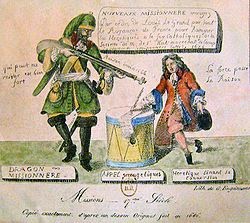
The origins of the word 'Huguenot' have been lost but it was thought to have originally been a derogatory term used to describe French Protestants. Although they were a small percentage of the French population they were influential. At one time it was estimated that half the French nobility were Huguenot. King Louis XIV saw this as a big problem. In 1681 he billeted soldiers in the homes of Huguenots to force them to convert to Catholicism. The ‘Dragonnades’ terrorised and abused their host families. A satirical French cartoon of the time called them ‘Nouveau Missionaires’

New Missionaries
There is a great website on the history of the Huguenots. It is called the Musee virtuel de protestantisme. The English translations can be a bit funny but it’s still well worth a look.
Huguenots had already been leaving France for many years but in 1685 King Louis XIV issued the Edict of Fontainebleau. Protestant clergy were banished, their Churches were to be destroyed, the laity were to be forcibly converted to Catholicism and they were forbidden from leaving the country. To Louis surprise 200,000 Huguenot laity left the country anyway. They dispersed to all points of the world. 50,000 went to England, 10,000 to Ireland they went everywhere. The French word refugee entered the English language at this time. 

Huguenot Cross
This was a disaster for France as Huguenots tended to be skilled and very well educated. They had occupations like silk weavers, clock makers, silver smiths, furniture makers and workers in the textile industries. Some were professional men such as doctors. This caused a huge le exode des cerveaux (brain drain) which damaged France’s economy for many years. In today’s terms it would be like if Star Trek was banned and all the IT guys decided to leave the country. A very serious problem.
Finding a Huguenot ancestry in my own family tree was easy. This is not typical. My grandmother’s mother was Harriet La Grange (1878-1965) who was born and lived in upstate New York near Albany. We have always known that her surname was of Huguenot origin. All the Albany La Granges were thought to have descended from an Omie De La Grange (c.1624-1731) who probably arrived in the area in 1656.
Harriet La Grange (1878-1965)
There was a La Grange who arrived in America even earlier than Omie La Grange. His name was Captain François Léger de La Grange and he arrived in Florida in 1564. I have not found evidence that he is in my family tree yet but he is part of an interesting Huguenot story.
In 1562 the French Admiral Gaspard de Coligny (1519-72) decided to found a colony in the New World. France was eager to establish a presence there and Gaspard wanted to find a safe haven for his fellow Huguenots. He must have foreseen trouble brewing for French Protestants as shortly after this decision the French Wars of Religion began. An American colony would be good for France and good for Huguenots too.

French Florida

Gaspard enlisted his close subordinate Captain Jean Ribault (1520–1565) to lead this expedition. In 1562 Ribault, with three ships and 150 Huguenot colonists, sailed across the Atlantic and established a new colony on Parris Island in present day South Carolina he called this colony Charlesfort. Two years later another expedition led by René Goulaine de Laudonnière (c. 1529–1574) sailed over and founded the French colony of Fort Caroline near what is now Jacksonville, Florida. The Charlesfort settlers decided to bail out after a year but the Fort Caroline colonists stayed on.

Fort Caroline

The Spanish were none too happy about having the French moving into their territory. It wasn’t that they were French so much as they were Protestants. They quickly established a colony they named St Augustine in September 1565 located about 60 Km south of Fort Caroline. Ribault hearing of this sent his ships over to force the Spanish out but a storm hit him just when he was ready to attack. He was forced back and most of his ships were wrecked off Cape Canaveral. Most of the crewmen of Ribault's ships managed to scramble ashore. Captain de La Grange was one of the survivors.

The Spanish, lead by Pedro Menéndez de Avilés, marched overland to Fort Caroline and massacred everyone there except the women and children. Menendez then hunted down Captain Ribault, Captain La Grange and his surviving crewmen.  After they surrendered he massacred them too. A sign was supposedly left at Fort Caroline that said ‘They were not massacred because they were French but because they were Heretics.”

 Jean Ribault (1520-1565)

The French were shocked and offended by this event. I can imagine King Louis XIV when hearing of this saying something like: “Those Spanish pigs! (pronounced peeegs) How dare they massacre our heretics! We are Frenchmen! We can massacre them ourselves!”
Gallic pride was restored in 1568 when Captain Dominique de Gourgues arrived at the now Spanish occupied Fort Caroline, then renamed San Matteo, and massacred every Spaniard there. Touché.

 
William Benjamin "Bill" Lenoir (1939 – 2010)
An astronaut with Huguenot ancestry.